GENEVA — The International Solar Intervention Commission has authorized construction of the first permanent segment of the Planetary Sunshade, moving the project beyond demonstration missions and into permanent deployment near the Sun–Earth L1 region.
Deployment of the initial array is expected to begin next year, following more than a decade of precursor missions that tested long-duration station-keeping, material degradation and autonomous formation control.
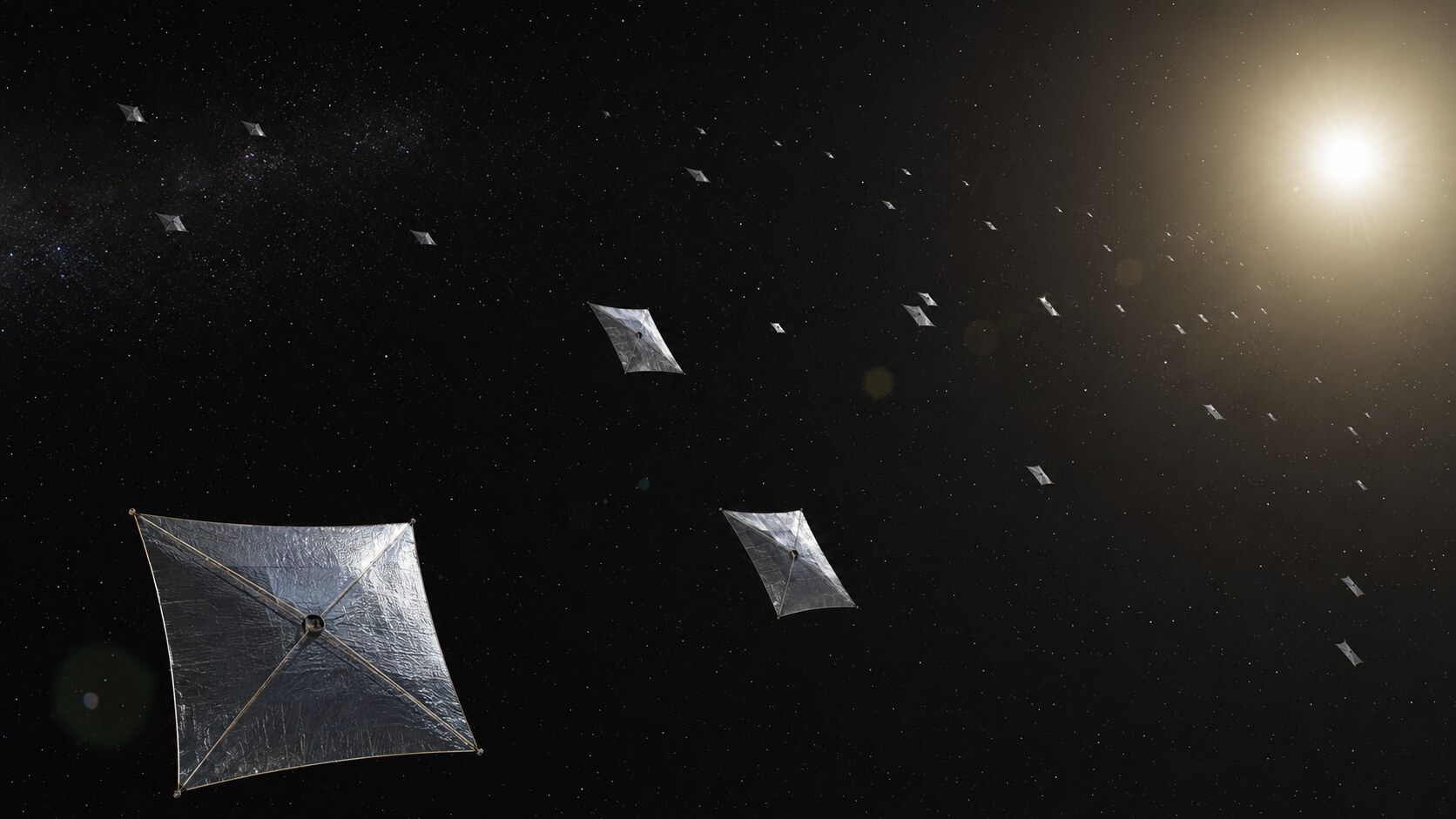
The first segment will consist of autonomous solar-sail units with a combined effective shading area of roughly 500 square kilometers. Officials said the array is too small to produce a measurable change in global temperatures.
Unlike earlier demonstration hardware, the new units are intended to remain in position and become part of the larger system if future phases are approved.
The commission stressed that the authorization does not permit active climate intervention.
Any expansion large enough to measurably reduce incoming solar radiation would require separate international authorization, including new assessments of potential effects on precipitation, agriculture and regional climate patterns.
The decision nonetheless marks a political threshold for a project that remained largely theoretical two decades ago.
In practical terms, the approved segment will not cool the planet. Its significance is that future governments would be deciding whether to expand a permanent system already in place, rather than whether to build one from scratch.
Supporters say the permanent array will allow engineers to test maintenance, collision avoidance, replacement and command systems at scales that temporary missions could not reproduce. They argue that governments need the option of a space-based intervention if emissions reductions and terrestrial adaptation prove insufficient to limit future warming.
Opponents say building permanent infrastructure before an international framework for its eventual use is fully settled risks making deployment politically difficult to reverse.
Several governments have also called for stronger guarantees that countries potentially affected by changes in monsoon patterns or agricultural conditions would have a formal role in any future decision to increase the system's climate effect.
Environmental groups opposing the project said they would challenge parts of the authorization in courts in participating countries and press the United Nations General Assembly to seek an advisory opinion from the International Court of Justice on the legal limits of planetary-scale solar intervention.
The commission said no timetable has been approved for a climate-effective array.
The initial segment, officials said, is infrastructure for a system the world has not yet decided to use.
Reader forecast
Do you buy this future?
When do you think a permanent Planetary Sunshade segment becomes real?
Relative to this report's 2044 date. One prediction per browser. Predictions cannot be changed after submission.